

A featherweight, fine-yarn stretch satin spun from 50-denier filaments and knit (not woven) for an exceptionally soft, fluid hand engineered for slip layers, lining-grade use, lingerie, and delicate fine blouses where weight needs to disappear.
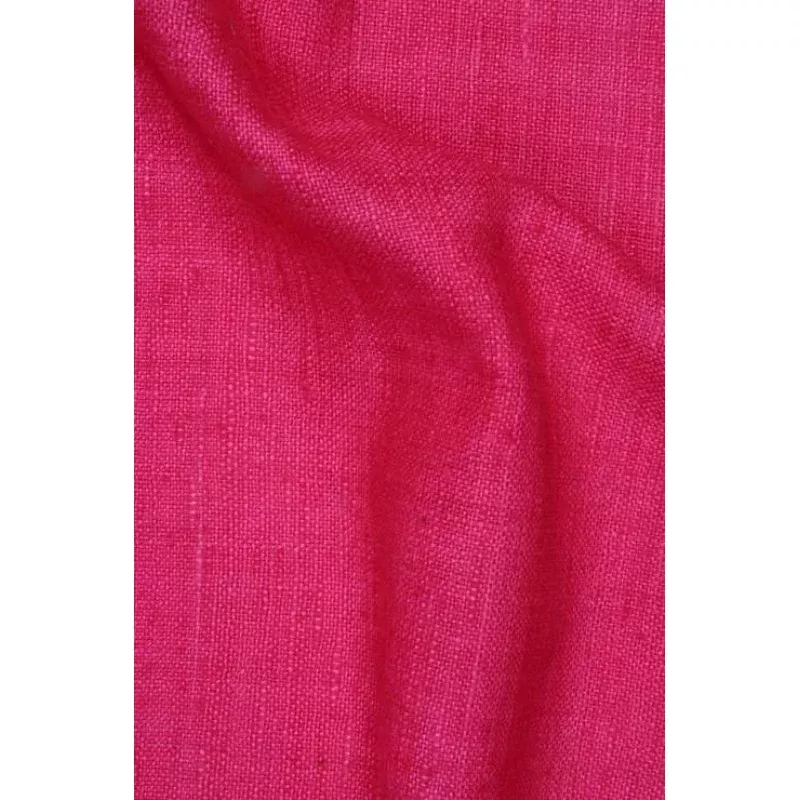
This is the fine-yarn version of silky stretch satin. Knit from 95% polyester and 5% spandex at approximately 136 gsm and 44/45″ wide, it is spun from 50-denier yarn finer than a standard stretch-satin filament which is what gives the cloth its almost weightless drape and softer-than-typical hand. The knit construction (rather than a woven satin weave) adds easy four-way give and a particularly smooth, skin-friendly face. At roughly 4 oz/yd, it sits at the lighter end of the satin spectrum: a delicate slip-layer fabric rather than a structural one. Two stocked colorways: Sophia Pink and Cellery.
Applications
Apparel
- Slip layers and underlinings inside dresses, gowns, skirts
- Lining-grade applications wherever soft, low-bulk inner layers are needed
- Fine blouses, cami tops, lightweight slip dresses, bias nightgowns
- Lingerie, soft-cup pieces and intimates
- Pajamas, robes, loungewear
- Soft scarves, headscarves, hair wraps, bonnets
- Pillowcases (silk alternative)
- Dance and costume slip layers
Events & decor
- Not recommended for events. The knit hand is too soft to sit cleanly, and 44/45″ width is restrictive for tablecloths, runners, chair covers and backdrops. For event-scale work choose a woven stretch satin or a heavier bridal satin.
The goal of this fabric is for it to be felt, not seen a soft inner skin, not a structural outer shell or event linen.
Hand & feel
Cool, soft, and notably lightweight in the hand. The knit construction reads as a gentle four-way give rather than a strong sport-stretch. The face has a delicate, controlled luster closer to a pearl finish than a high-shine satin and the reverse is similarly smooth thanks to the fine 50-denier filaments. Because it is knit rather than woven, the fabric drapes in soft folds rather than crisp creases, and conforms to whatever sits underneath it.
Best for / not ideal for
Best for
- Slip layers, underlinings, lining-grade work
- Lingerie, soft-cup pieces, sleepwear
- Fine, body-following blouses and camis
- Pillowcases and hair wraps
Not ideal for
- Structured outerwear, jackets, tailored bodices
- Ball gowns or formal occasion gowns with built-in structure
- Tablecloths, runners, chair covers, full event drapery (too light, width too narrow)
- Heavy embellishment or beadwork (will pull on a 136 gsm ground)
- High-heat ironing polyester and spandex both require low temperatures
Specifications
- Composition: 95% Polyester, 5% Spandex
- Yarn: Fine 50-denier filament (D/P 50D)
- Construction: Knit
- Weight: ~136 gsm (~4 oz/yd, featherweight)
- Width: 44/45″
- Stretch: Four-way knit give with clean recovery
- Hand: Soft, fluid, body-following
- Sheen: Delicate, controlled, pearl-side
- Country of origin: Korea
- Colorways: 2 (Sophia Pink, Cellery)
- Sold by the yard
Care
- Machine wash cold on delicate in a mesh lingerie bag, or hand wash.
- Mild detergent. No bleach, no optical brighteners.
- Lay flat or hang to dry skip the dryer to protect the spandex.
- Iron on low (polyester setting) on the reverse with a press cloth, or simply steam.
- Do not dry clean unless the finished garment specifies it.
FAQ
What does “50 denier” mean?
Denier measures yarn fineness lower numbers are finer. 50 denier is on the finer end of stretch-satin filament yarns and produces a lightweight, soft fabric. A typical stretch satin face yarn often runs heavier than 50D.
Knit satin vs woven satin what is the difference?
A woven satin is constructed on a loom with the classic satin float weave that produces the smooth, lustrous face. A knit satin is constructed on knitting machines with stretchier interlocking loops, then finished to give a satin-like face. Knit satins have natural four-way give without high spandex content, drape more softly, and feel more skin-friendly best for slip layers, lining-grade applications, lingerie and sleepwear.
Can I use it as a lining?
Yes the knit construction, fine 50-denier yarn and ~136 gsm weight make it well suited to lining-grade applications inside dresses, gowns and skirts.
Is it sheer?
At ~136 gsm it is light. Pale shades may show mild transparency; deeper shades are effectively opaque. Swatch to confirm coverage for your project.
Is it good for chair covers, backdrops or event drapery?
No. The 44/45″ width is restrictive and the knit hand is too soft to sit cleanly. Use a woven stretch satin for chair covers and event work, or a heavier bridal satin for premium linens.
How do I sew it?
Use a fine ballpoint or microtex needle (size 65/9 or 70/10). Lengthen the stitch slightly to prevent puckering. Cut single-layer where possible. Finish seams with French seams or a fine overlock. Steam rather than iron, and test heat on a scrap first.




 No products in the cart.